To recap, my group chose to work on NUS NextBus. The goal of the second milestone was to understand the pain points of users.
Product Ecology
My group started with the Product Ecology model to gain a broad overview of NUS NextBus.
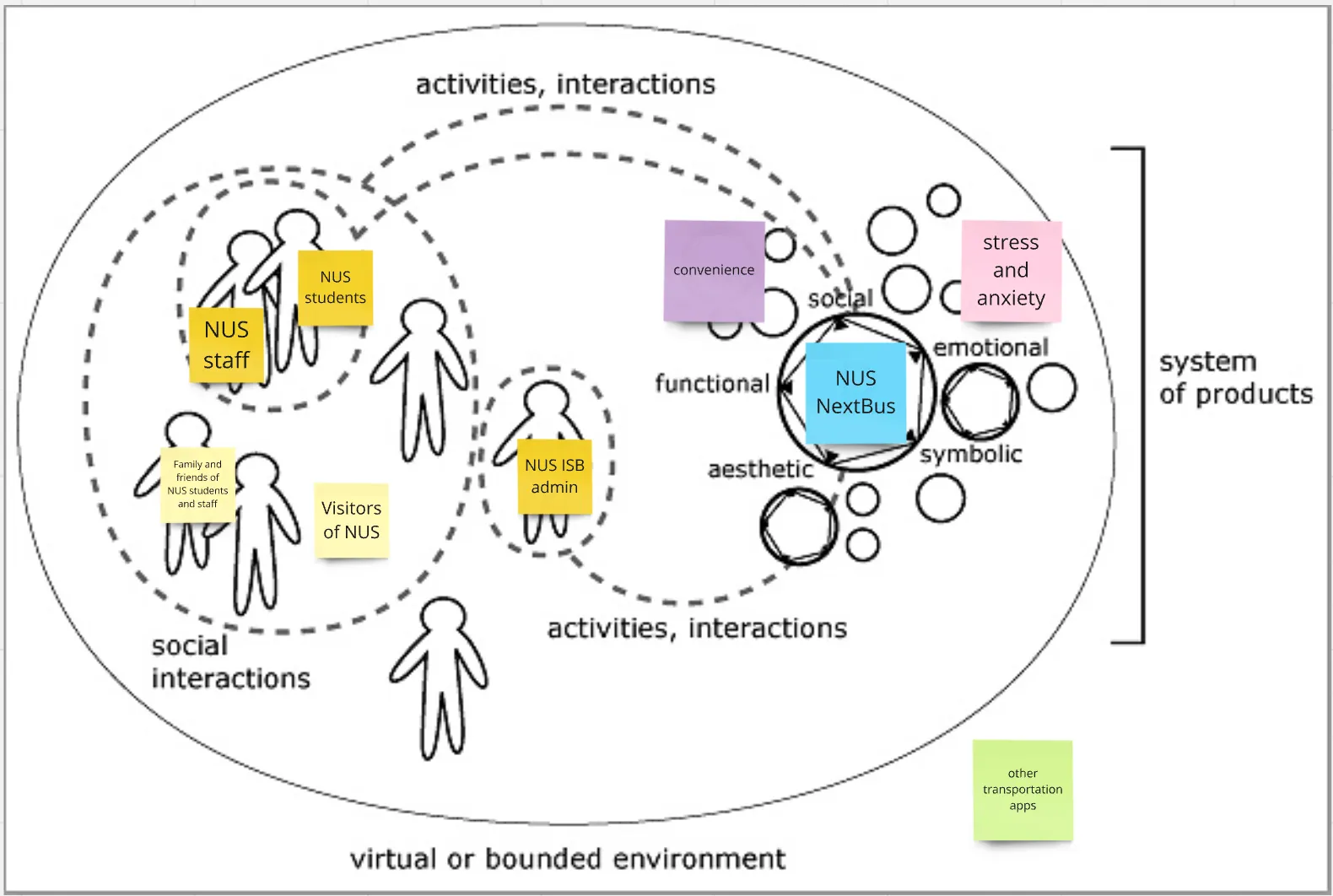
As a budding designer, I’ve primarily focused on ensuring my designs are functionally sound. However, I realised the importance of considering both functional and non-functional elements such as social and emotional impact of our design. The Product Ecology model was valuable in guiding me to a more user-centered design approach which highlights the functional and non-functional aspects.
One aspect that stood out to me was the emotional factor. In the context of NUS NextBus, users often feel stressed and anxious when checking the bus timings, especially when they are in a rush to get to their next location without being late. I felt this was important to incorporate in our design process, to help users feel less anxious when using our application. Some of the how might we questions that came up in my head were:
- How might we help users alleviate uncertainty and reduce stress when checking the bus timings?
- How might we support users to get to their destination on time?
- How might we make the checking of bus timings easier and more intuitive?
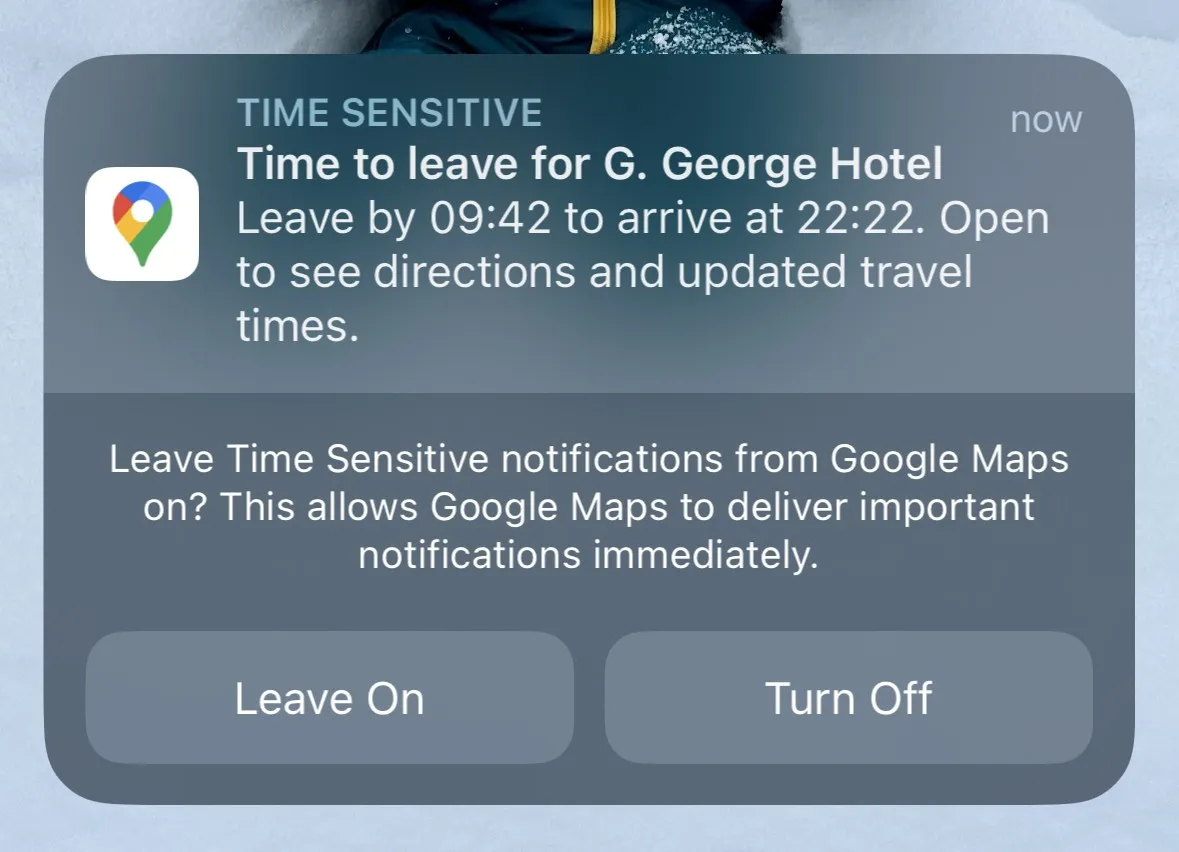
I also looked into ways that existing transportation applications designed for reducing user anxiety. I found that some applications, for instance, Google Maps, would take the initiative to alert users when to leave.
User Research
This week, our group also carried out user research. Based on the feedback from our first milestone, we realised that our claims were unsubstantiated. The user research was crucial in gathering the data needed to support these claims. Given the short timeframe, we opted for interviews and secondary research through user reviews on the App Store. I spoke to 3 users.
Our user research yielded some interesting insights.
One, many users felt that NUS NextBus was easy to use, regardless of their experience level with the application. This disproved our initial hypothesis that there would be more friction in using the application. I felt that this was likely due to its similarity with other bus applications, hence the learning curve was not steep. Another reason could be the students’ tech-savvy nature.
Two, most users primarily used the application for bus timings. Many users were unaware of the full range of features. For example, the app’s ability to display estimated bus load capacity, which could be useful for travel planning, was often overlooked. This raises questions about the value and prominence of these features. I wonder whether if their design might have contributed to their underutilization, or if these features were unnecessary to begin with.